


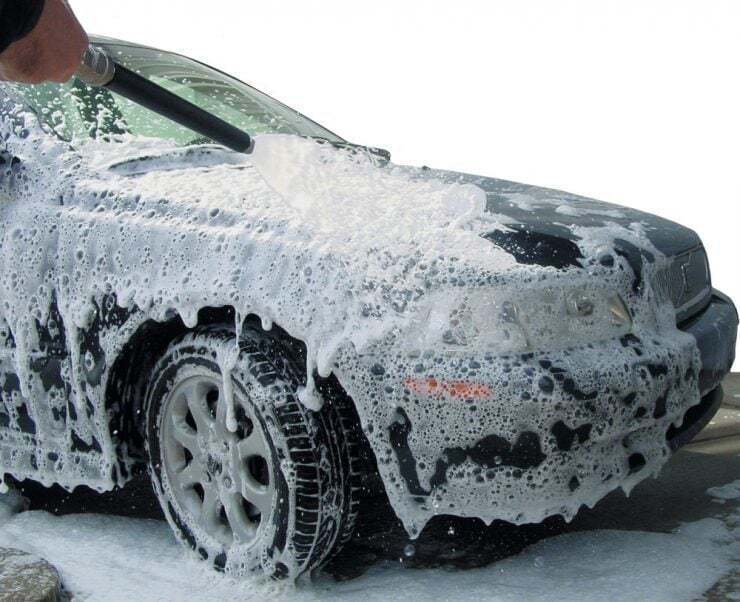
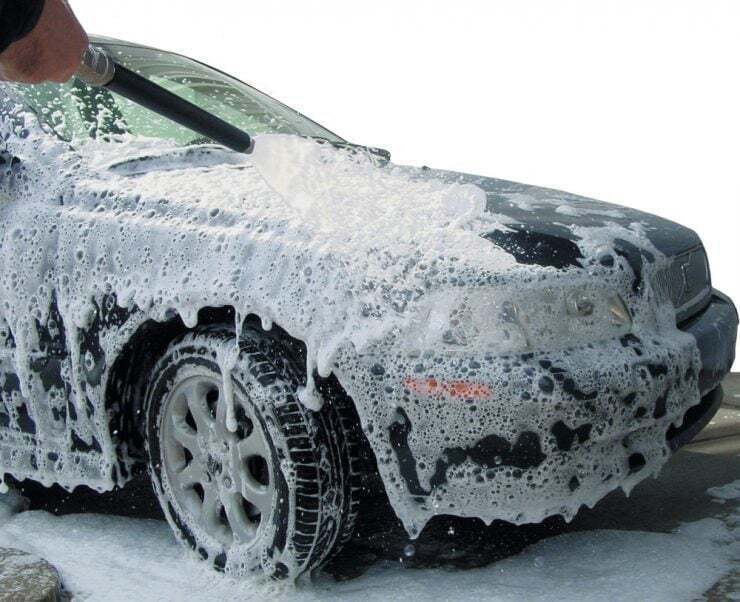
- Fundamentally, in the context of chemical cleaning, foam a mixture of water, chemical, and air.
- Foam clings to surfaces longer than liquid spray and increases chemical contact time.
- Foaming expands the chemical, allowing less chemical to cover more surface area.
- Foam prevents over-application by providing visual confirmation of coverage.
- Foam is projected at a lower pressure than liquid spray and can be used on more sensitive surfaces.

There are many reasons to apply chemicals as foam instead of as liquid spray. However, keep in mind that foaming may not be the ideal application method for your particular chemical type or application needs (spraying or fogging may be more appropriate).
Cleaning objectives, chemical properties, and the available utilities (compressed air) will determine which type of foam equipment is best for the job.
Foam consistency (wet versus dry) plays a key role in maximizing the effectiveness of foam cleaning procedures. To appreciate the benefits, it is helpful to understand the different types of foam.
Lafferty offers Airless and Air-Assisted Foamer configurations to dilute chemical on demand (Venturi) or utilize ready-to-use chemical (Pump Fed, Air Pump, etc.)
Not seeing the results you were hoping for? Consider these Frequently Asked Questions as well as the unit-specific troubleshooting guide in the Installation & Operation Instructions.
- Is the chemical designed for foaming?
- Foaming agents can be added to enhance the foaming properties of non-foaming or low-foaming chemicals.
- Is the chemical designed to foam well at the desired concentration (dilution ratio)?
- It may be necessary to increase the chemical concentration or add a foaming agent to enhance the overall foaming properties of the solution.
- Is the compressed air too high or too low?
- Adjust the air valve as needed to make the foam wetter or drier.
- Too much compressed air will produce a very dry foam that will not clean effectively. With too much air, the discharge hose may “buck” and foam output will sputter and behave inconsistently.
- Too little compressed air will produce a watery foam that will not cling to surfaces well.
- Adjust the air valve as needed to make the foam wetter or drier.